Manual blood pressure cuffs offer a reliable, skill-based method for measuring vital signs, favored by healthcare professionals and those seeking precise readings.
Pharmacists recommend these cuffs for accuracy, especially upper arm models, and the American Medical Association validation ensures trustworthy results for home monitoring.
Why Choose a Manual Cuff?
Opting for a manual blood pressure cuff empowers users with a deeper understanding of their cardiovascular health, unlike automatic monitors. These cuffs demand active participation, fostering skill development – a valuable asset for nursing students and healthcare enthusiasts.

Many professionals and pharmacists suggest manual cuffs for potentially faster and more accurate measurements when used correctly, relying on auscultation rather than algorithms. While requiring practice to master inflation and deflation techniques, the control offered minimizes errors linked to positioning, a common issue with wrist monitors.
Furthermore, manual cuffs often present a more cost-effective solution, particularly for those not needing advanced features found in automatic devices.
Benefits Over Automatic Monitors
Manual blood pressure cuffs distinguish themselves from automatic monitors through enhanced control and a reduced reliance on potentially flawed algorithms. While automatic devices offer convenience, they can be susceptible to inaccuracies stemming from improper positioning – a noted concern, particularly with wrist-based models.
Manual cuffs, utilizing a stethoscope and aneroid gauge, allow for direct auscultation of Korotkoff sounds, providing a more nuanced assessment. This method fosters a greater understanding of blood pressure dynamics.
Additionally, some users report faster measurement times with manual cuffs, and the absence of electronic components can translate to greater long-term durability and potentially lower costs.

Key Features to Consider
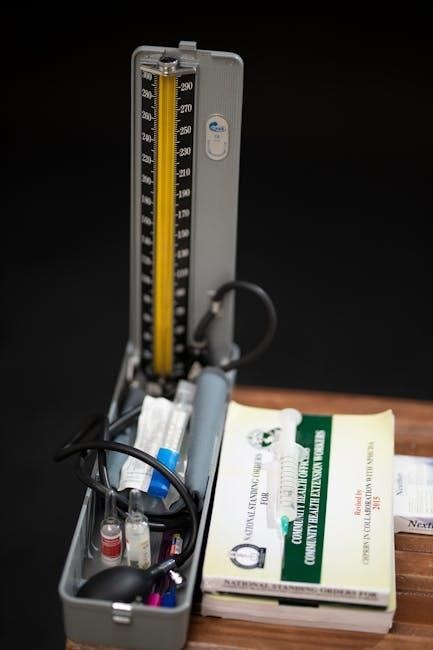
Selecting a manual cuff requires attention to cuff size, aneroid gauge accuracy (ideally +/- 3mmHg), and stethoscope quality for clear Korotkoff sound detection.
Cuff Size and Fit
Proper cuff sizing is paramount for accurate blood pressure readings. An ill-fitting cuff – too small or too large – can significantly distort results, leading to misdiagnosis or ineffective treatment. Most adult cuffs accommodate a standard arm circumference, but variations exist.
Look for cuffs with adjustable features, like Velcro closures, to ensure a snug, yet comfortable fit. OneClearWinner cuffs are noted for their comfortable, non-latex design and easy application. It’s crucial to measure your arm’s circumference before purchasing to select the appropriate size, avoiding reliance on generic “adult” sizing. A correctly fitted cuff will allow for proper compression and accurate auscultation of Korotkoff sounds.
Aneroid Gauge Accuracy (+/- mmHg)
Aneroid gauge accuracy is a critical factor when selecting a manual blood pressure cuff. A reliable gauge provides precise readings, essential for effective healthcare monitoring. Look for cuffs specifying an accuracy of +/- 3 mmHg, as highlighted by OneClearWinner, indicating a high level of precision.
The American Medical Association (AMA) validation is a strong indicator of accuracy, ensuring the device meets established standards. Professional-grade cuffs are often built to withstand a minimum of 10,000 inflations while maintaining calibration. Regularly checking for calibration accuracy (discussed later) is vital, as uncalibrated cuffs can yield inaccurate and potentially dangerous results. Prioritize gauges with clear, easy-to-read markings for optimal usability.
Stethoscope Quality
A high-quality stethoscope is paramount for accurate blood pressure readings with a manual cuff. Clear auscultation of Korotkoff sounds – the tapping noises indicating systolic and diastolic pressure – is crucial. While some cuffs, like the HealthSmart, include a stethoscope, its quality can vary.
Customer reviews often mention stethoscope limitations, such as difficulty hearing sounds or issues with the carrying case. Investing in a separate, well-reviewed stethoscope may be beneficial. Ensure the eartips create a good seal for optimal sound transmission. A quality stethoscope, paired with proper technique, significantly enhances the reliability of manual blood pressure measurements, making it a vital component of a good cuff kit.

Top Manual Blood Pressure Cuff Brands
Leading brands like HealthSmart, OneClearWinner, and Classic 3 consistently receive positive feedback for reliability, accuracy, and durability in manual blood pressure monitoring.
HealthSmart Manual Blood Pressure Monitor
The HealthSmart Manual Blood Pressure Monitor presents a cost-effective option for those prioritizing a traditional measurement approach. Users report faster and potentially more accurate readings compared to electronic monitors, thanks to the manual pump and stethoscope combination.
However, a common critique centers around the storage bag being inadequately sized. Many customers find it challenging to neatly repack the stethoscope within the provided bag, potentially leading to inconvenience. Despite this packaging concern, the monitor generally receives positive reviews for its value and functionality, proving suitable for basic home blood pressure tracking. It’s a good choice for individuals seeking a reliable, budget-friendly manual cuff.
OneClearWinner Manual BP Cuff
The OneClearWinner Manual BP Cuff distinguishes itself through its focus on user-friendliness and durability; Designed for comfortable self-measurement, it features a non-latex adult cuff with a secure Velcro attachment and a convenient clip-to-cuff system for easy application and removal.
Accuracy is a key selling point, boasting a precision calibration within +/- 3mmHg, offering peace of mind regarding reading reliability. Furthermore, this cuff is built to withstand rigorous use, guaranteeing a minimum of 10,000 inflations ranging from 0 to 300mmHg. This makes it a robust, professional-grade option suitable for frequent monitoring and long-term dependability.
Classic 3 Manual Blood Pressure Cuff
The Classic 3 Manual Blood Pressure Cuff is frequently recommended, particularly for students and those seeking a budget-friendly yet reliable option. Online discussions, like those on Reddit’s r/StudentNurse, highlight its value as a capable tool for learning and practicing manual blood pressure measurement.
Users appreciate its affordability, but caution is advised regarding calibration. Reviews suggest checking for accuracy upon purchase, as some units may arrive uncalibrated. Despite this potential issue, the Classic 3 remains a popular choice due to its accessibility and suitability for foundational skills development, offering a practical entry point into manual blood pressure techniques.

Understanding Calibration and Validation
Accurate readings depend on proper calibration and validation, like that offered by the American Medical Association, ensuring reliability and minimizing potential errors in measurement.
Importance of AMA Validation
American Medical Association (AMA) validation is crucial when selecting a manual blood pressure cuff, guaranteeing a higher degree of accuracy and reliability in your readings. U.S. News highlights that checking for AMA validation helps ensure you obtain more trustworthy results, especially for home monitoring.
This validation process rigorously tests devices against established standards, minimizing the risk of inaccurate measurements. Some customer reviews on Amazon caution that certain inexpensive cuffs may not be properly calibrated, emphasizing the value of validated options. Choosing an AMA-validated cuff provides peace of mind, knowing the device meets stringent performance criteria and supports informed healthcare decisions.
Checking for Calibration Accuracy
Regularly checking the calibration of your manual blood pressure cuff is essential for maintaining accurate readings over time. While professional recalibration is ideal, users can perform basic checks to identify potential issues. OneClearWinner emphasizes their aneroid gauges are precision calibrated to +/- 3mmHg, offering inherent reliability.
However, be aware that some lower-cost options, as noted in Reddit discussions, may arrive uncalibrated or drift over time. Consistent monitoring against a known accurate device, or professional testing, can reveal discrepancies. Addressing calibration concerns ensures the cuff provides dependable data, supporting effective blood pressure management and informed healthcare decisions.
Potential Issues with Uncalibrated Cuffs
Using an uncalibrated manual blood pressure cuff can lead to significantly inaccurate readings, potentially jeopardizing health management. Amazon reviews highlight concerns about calibration with cheaper models, emphasizing the risk of unreliable data. Inconsistent measurements can result in misdiagnosis or inappropriate medication adjustments.
Incorrect readings may falsely elevate or lower blood pressure, causing unnecessary anxiety or a false sense of security. Prioritizing a validated cuff, like those recommended by the American Medical Association, or regularly checking calibration, is crucial. Ignoring this aspect can undermine the benefits of home monitoring and compromise patient care.

How to Properly Use a Manual Blood Pressure Cuff
Correct technique is vital for accurate readings; ensure proper cuff positioning, comfortable arm support, and skillful inflation/deflation while listening for Korotkoff sounds.
Preparing for Measurement
Before taking a reading, it’s crucial to prepare both yourself and the environment for optimal accuracy. Rest for at least five minutes in a quiet room, avoiding caffeine, exercise, and smoking for 30 minutes beforehand.
Sit comfortably with your back supported and feet flat on the floor. Ensure your arm is bare and supported at heart level. Select the appropriate cuff size – a too-small cuff will yield falsely high readings, while a too-large cuff can result in falsely low values. Familiarize yourself with the components: the cuff, aneroid gauge, and stethoscope. A properly prepared setup and patient contribute significantly to reliable blood pressure measurement using a manual cuff.
Correct Positioning of the Cuff
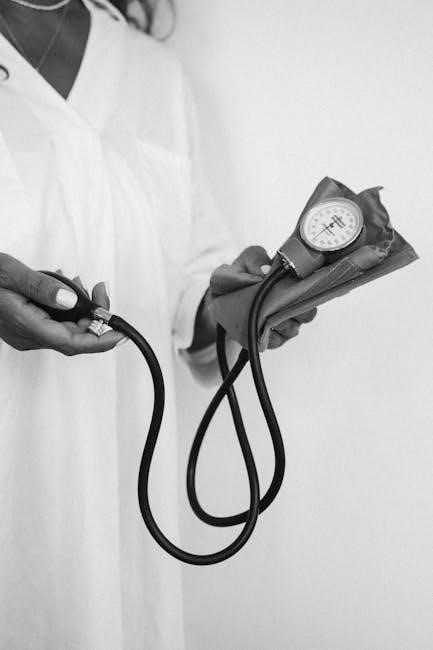
Proper cuff placement is paramount for accurate blood pressure readings. Wrap the cuff snugly around your upper arm, approximately one inch above the bend of your elbow. The artery marker on the cuff should align with the brachial artery’s location.
Ensure the cuff isn’t too tight or too loose – you should be able to slide two fingertips underneath the edge. Support your arm at heart level, using a table or pillow if needed. Incorrect positioning, particularly using a wrist cuff, increases the risk of errors. Maintaining consistent positioning during each measurement is vital for reliable tracking and assessment of your blood pressure over time.
Inflation and Deflation Techniques
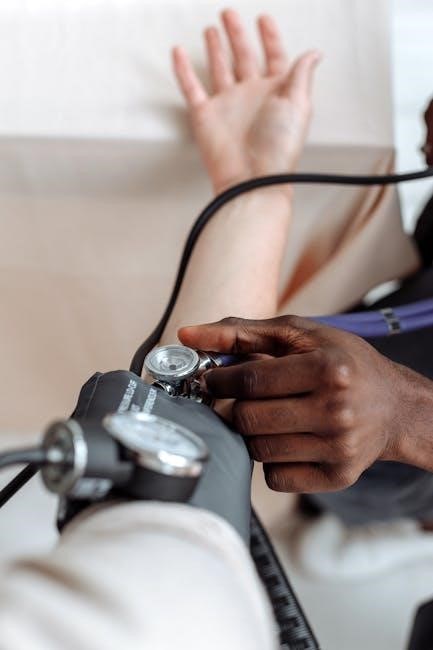
Inflate the cuff smoothly and steadily using the bulb until the radial pulse disappears, then add 30 mmHg more. This ensures you’ve surpassed systolic pressure. Begin slowly deflating the cuff at a rate of 2-3 mmHg per second – crucial for accurately identifying Korotkoff sounds.
Listen carefully through the stethoscope placed over the brachial artery. The first clear tapping sound marks the systolic pressure, while the disappearance of sounds indicates diastolic pressure. Avoid rapid deflation, as it can lead to inaccurate readings. Consistent technique is key; practice makes perfect for reliable blood pressure measurement with a manual cuff.
Common Issues and Troubleshooting
Troubleshooting includes ensuring proper stethoscope placement to clearly hear Korotkoff sounds, and verifying cuff fit to avoid inconsistent readings, alongside proper storage.
Difficulty Hearing Korotkoff Sounds
Challenges in auscultating Korotkoff sounds are common with manual cuffs, often stemming from ambient noise or improper technique. Ensure a quiet environment, and firmly, but gently, apply the stethoscope’s diaphragm over the brachial artery.
Poor stethoscope quality can significantly hinder sound detection; investing in a reliable instrument is crucial. Additionally, confirm the cuff isn’t positioned too loosely or tightly, as this impacts sound transmission. If sounds remain faint, re-position both the cuff and stethoscope, and consider a second attempt by another trained individual to validate the reading. Remember, practice enhances auscultation skills!
Inconsistent Readings
Fluctuating blood pressure readings with a manual cuff often indicate a technical issue rather than genuine physiological changes. Ensure proper cuff size and placement are consistently maintained during each measurement. Patient positioning – seated, feet flat, arm supported at heart level – is also critical for reliable results.
Calibration drift can lead to inaccuracies; regularly check the aneroid gauge. If inconsistencies persist, consider the cuff may not be validated by the American Medical Association. Taking multiple readings, spaced a few minutes apart, and averaging them can improve accuracy. If problems continue, a different cuff or professional assessment is recommended.
Cuff and Stethoscope Storage
Proper storage significantly extends the lifespan and maintains the accuracy of your manual blood pressure monitoring kit. Store the cuff and stethoscope in a clean, dry environment, away from direct sunlight and extreme temperatures. The HealthSmart cuff’s bag, while sometimes problematic in fit, offers basic protection.
Avoid tightly coiling the stethoscope tubing, as this can damage the internal lumen and affect sound transmission. Gently loop it. Protect the aneroid gauge from impacts, as damage can compromise calibration. Regular inspection for wear and tear is crucial. Careful storage ensures consistent, reliable performance over time.

Cost and Value Considerations
Manual cuffs range from budget-friendly options like the Classic 3 to professional-grade models; durability and accuracy are key factors when evaluating long-term value.
Budget-Friendly Options
For students or those new to manual blood pressure measurement, affordable options provide excellent value without sacrificing essential functionality. The Classic 3 Manual Blood Pressure Cuff frequently appears in recommendations, particularly among nursing students, due to its low cost and accessibility on platforms like Amazon.
However, user reviews highlight a crucial point: verifying calibration is paramount with cheaper models. Some customers have reported inconsistencies or concerns about pre-calibration. Despite this, the Classic 3 remains popular for learning the technique, offering a practical entry point.
These options allow individuals to gain proficiency before investing in higher-end, professionally calibrated cuffs, making them a sensible starting point for home health monitoring.
Professional-Grade Cuffs
Healthcare professionals and those demanding utmost accuracy often opt for professional-grade manual blood pressure cuffs. Brands like OneClearWinner emphasize precision calibration, boasting accuracy within +/- 3mmHg and a durability exceeding 10,000 inflations – a testament to their robust build quality.
These cuffs are designed for frequent, reliable use, often featuring high-quality aneroid gauges and durable materials. While representing a higher initial investment, the longevity and consistent performance justify the cost for serious users.
The HealthSmart Manual Blood Pressure Monitor, while also offering a budget option, demonstrates that even within a brand, quality varies, with some models prioritizing accuracy and durability over price.
Long-Term Durability
Investing in a durable manual blood pressure cuff translates to consistent, reliable readings over an extended period. OneClearWinner specifically highlights a lifespan of at least 10,000 inflations, from 0 to 300mmHg, showcasing a commitment to longevity.
However, proper storage is crucial; protecting both the cuff and stethoscope from damage extends their usability. While some customer reviews mention issues with the HealthSmart bag’s fit, indicating a potential weak point, overall build quality remains a key factor.
Choosing a cuff constructed with robust materials and a well-calibrated gauge minimizes the need for frequent replacements, offering significant long-term value.